.png?width=200&height=111&name=RA%20Logo%20450%20x%20250%20(4).png)
.png?width=450&height=250&name=RA%20Logo%20450%20x%20250%20(4).png)
By Rupert Guinness, Australian Rowing Teams Media Manager
When Paralympic Gold Medallist Nikki Ayers OAM PLY reflects on her rowing career, her thoughts drift not to medals, records or podiums, but to the lessons she learned about resilience, identity, trust and the importance of putting people before performance.
Ayers, 35, announced her retirement from rowing on May 25, bringing down the curtain on one of the most remarkable journeys in Australian sport.
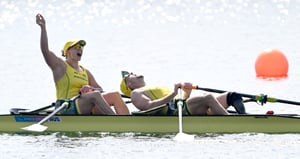
Alongside her now retired PR3 Mixed Double Sculls partner Jed Altschwager, Ayers won Australia's first Paralympic rowing Gold Medal at the 2024 Paralympic Games in Paris.
Retirement was not an overnight decision. “It’s been a long time coming,” Ayers says.
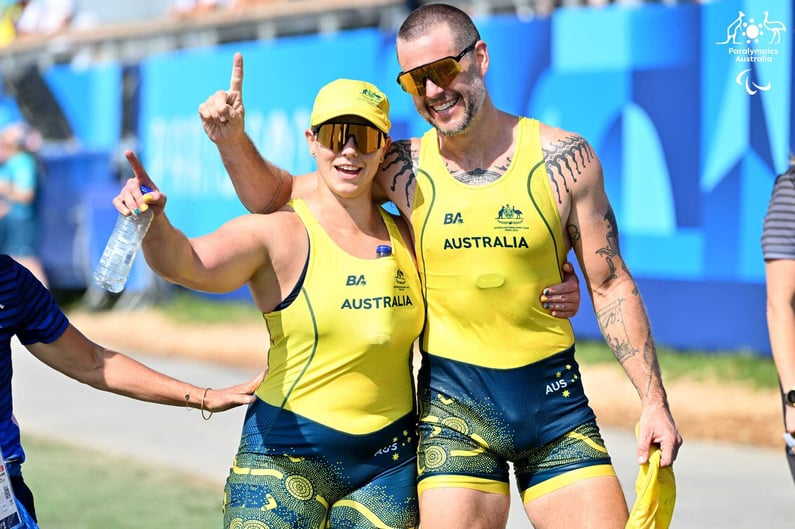
Ayers and Altschwager at the Paris 2024 Paralympic games. Photo: Paralympics Australia
After Paris, Ayers stepped away from the daily demands of elite sport and began reflecting on the lifestyle she had been living. The reality of balancing high-performance rowing with a career as a nurse and midwife had become increasingly difficult.
“Rowing at that elite level, six days a week, multiple sessions a day, and still working shift work as a nurse and midwife on top of that … there was a lot of burnout,” she said.
“There was also a lot of stuff behind the scenes that people don’t realise takes a toll.”
For Ayers, the sacrifices required to chase Paralympic success had been worthwhile, but they also came at a cost. Like many elite athletes, she had missed birthdays, family gatherings and countless moments with friends in the pursuit of sporting excellence.
While Ayers accepted those sacrifices, she says they still impacted her wellbeing.
“It's mostly about putting myself first,” Ayers says of her retirement. “Going back to that lifestyle wasn't going to be realistic, and it wasn't going to be what I wanted.”
That has not diminished her love for rowing. She speaks warmly of the sport that helped transform her life after a devastating knee injury suffered while playing rugby union.
When Ayers talks of rowing, she recalls freezing Canberra mornings, spectacular sunrises and the joy of training alongside teammates and coaches she trusted.
“Rowing gave me identity. It gave me purpose,” Ayers says. “It gave me amazing relationships and helped mould me into the person I am today.”
That sense of purpose became particularly important after Ayers sustained the injury that changed her life a decade ago. “There were dark times in my life where I couldn't see what was ahead,” she says. “Rowing was that light that got me through.”
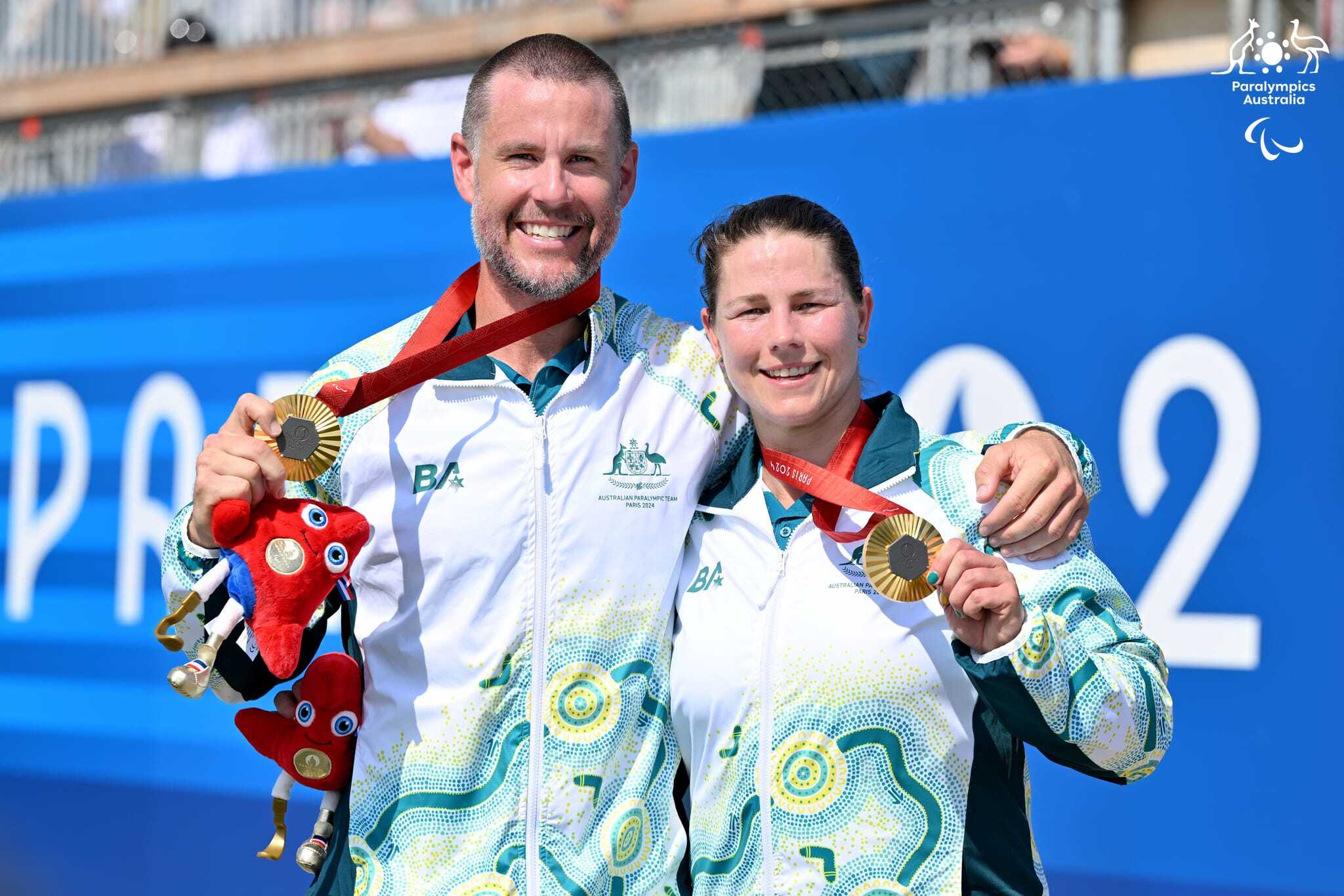
Altschwager and Ayers won Australia's first Paralympic rowing Gold Medal. Photo: Paralympics Australia
Growing up in the NSW South Coast town of Dalmeny, Ayers was one of only two girls playing rugby league in the region. When they reached the age of 12, playing opportunities disappeared simply because they were female. There were few female sporting role models and even fewer openly queer athletes visible in Australian sport.
However, while Ayers played rugby league in her early years, it was years later and in rugby union that the heartbreaking moment leading to her journey to rowing came.
Ayers then appeared destined for a long future in rugby union, a game that she still loves today; but in March 2016, she suffered a devastating knee injury during a match.
She sustained permanent damage to her peroneal nerve and popliteal artery that caused foot drop. She also developed compartment syndrome from a lack of blood supply to the lower part of her right leg that required the removal of dead muscle tissue.
What followed was a gruelling physical and emotional battle. Over the next nine months Ayers underwent 16 operations, including 10 in the first three weeks, while confronting the possibility that many of the things she once took for granted might never be the same again. Despite the uncertainty, the support of family became her anchor.
Her mother, sister and grandmother stood beside her through all the surgeries, rehabilitation and all the uncertainty that followed. “I don't know if I would have made it through without them,” Ayers says. “They reminded me that I had what it takes.”
The road back would eventually lead Ayers to Para-rowing, where she discovered not only a new sport, but a renewed sense of identity and purpose.
What began as a pathway to recovery became an opportunity she could never have imagined, culminating in Paralympic Gold and a place in Australian sporting history.
However, Ayers believes the greatest lesson learned from that journey was not about results, medals, titles and records. It was about learning that even life's most difficult setbacks can open doors to opportunities that previously seemed impossible.
“I want young girls, people with disabilities and people in the queer community to see that they can follow their dreams and achieve greatness while being their true authentic self,” she says.
Ayers’s message is not confined to sport. It is about courage, belonging and self-belief that can be drawn upon in all factors of life. “We all face challenges,” she says.
“At the end of the day, we're all human. We can all be brave in the face of adversity.”
That emphasis on humanity became a recurring theme throughout her reflections.
Ayers believes sport sometimes loses sight of the person behind the athlete. Results, and expectations often dominate conversations, while the individual navigating life's challenges receives less attention. “People forget we're human,” she said.
Whether it is a family tragedy, financial pressure, physical injury, mental health struggles or the emotional demands of elite sport, Ayers believes that athletes often carry burdens that remain invisible to the public. “Sometimes just asking someone, ‘How are you today?’ can literally save a life,” she says.
Ayers has become increasingly passionate about advocacy and wants to use her platform to create conversations around inclusion, wellbeing and athlete welfare.
“I'm trying to do more in the public speaking space,” she said. “If I can help create awareness and remind people that we're human, then that's something I want to do.”
Ayers remains deeply proud of what she and Altschwager achieved together as a crew.
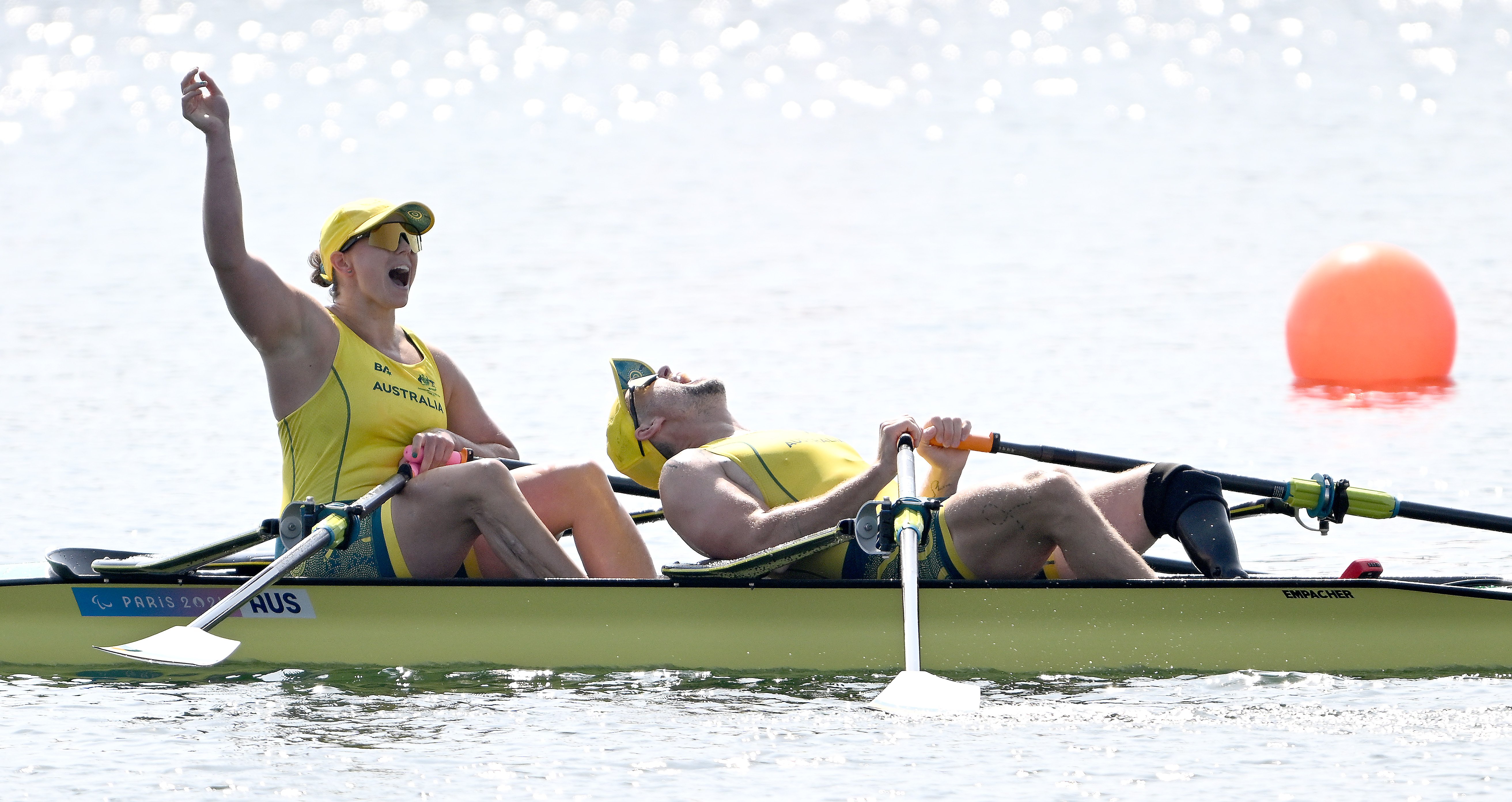
Ayers celebrates victory in the PR3 Mixed Double Sculls. Photo: Paralympics Australia
Asked what made their partnership so successful, she points to trust. The pair committed fully to the project from the moment the PR3 Mixed Double Sculls was introduced for the Paris Paralympics. “We trusted each other completely,” she said.
That trust extended beyond training programs and race plans. It created an environment where both athletes could be vulnerable, honest and accountable.
If something wasn't working in the boat, they discussed it openly. If one of them was struggling personally, the other provided support. “There was never blame,” Ayers says. “We created a safe space where we could have those conversations.”
Their support network included South Australian Sports Institute (SASI) coaches Christine MacLaren and Nick Mitchell, both of whom are now employed at Rowing Australia fulltime. Together they built a culture based on experimentation, trust and enjoyment.
Sometimes that experimentation took unusual forms. Ayers recalls training sessions where she and Altschwager rowed blindfolded, occasionally one at a time and sometimes together, relying entirely on communication, feel and unwavering trust.
“We would be out there rowing blindfolded with stretchy cords attached to us,” Ayers says with a laugh. “It probably looked medieval to anyone watching.”
The exercises forced the pair to become more attuned to each other's movements and rhythms while reinforcing the trust that underpinned their partnership.
“If Jed was blindfolded, he had to trust me. If I was blindfolded, I had to trust him.
“Sometimes we would both be blindfolded and had to trust the coaches watching us.”
Ayers believes those experiences reflected the culture that ultimately drove the crew's Paralympic Games success in Paris. Trust was never simply about performance. It also created a safe environment where both athletes could support each other through personal challenges and have difficult conversations without fear of blame.
“At the end of the day, we got to train with our mates,” she says. “We got to spend time with people who genuinely wanted us to be the best version of ourselves.
“People often see the medal, but they don't always see the support behind it.
“I'm incredibly grateful to everyone who backed me along the way — my family, Jed, Christine, Nick, SASI, RA and all the people who believed in me. Without that support, none of this would have been possible.”
Ayers also recognised the contribution of Mrs Gina Rinehart AO and Hancock Prospecting, saying: “The support from Mrs Rinehart and Hancock Prospecting makes a real difference to athletes. Being able to train, compete and chase your dreams at the highest level requires support from a lot of people, and I'm very grateful for that.”
Looking ahead, Ayers remains optimistic about the future of Australian Para rowing.
She believes the program's centralised model is a positive step and is particularly excited by MacLaren's role as Para rowing Lead Coach in developing future athletes.
Most importantly, Ayers hopes more athletes discover the opportunities that rowing provided her. “Rowing gave me a place where I felt I belonged,” she says.
Life has changed for Ayers since Paris. Now back in Adelaide, she lives with family, including her two young nieces, who are a major source of joy. She continues nursing and midwifery work while exploring what might come next in sport and life.
She is also exploring where sport might take her next. While she has stepped away from rowing, she says of the uncertainty: “It's exciting. I'm looking forward to what's next.”
Her legacy may be a message: that courage is not only found in winning, but overcoming adversity, being true to oneself and helping others believe they can do the same.